Life,
even so
Healing complex, developmental and attachment trauma
with NARM — the NeuroAffective Relational Model
Is this you?
You struggle to feel like you belong. You find most conversations shallow, and long for depth and authenticity from the very first exchange.
No, Susan, I don’t want to talk about the weather. I want to know what you think about reincarnation and karma.
So you often prefer being alone to being in poor company. You love reading and watching series. In those imaginary worlds and their characters, you find the thrill, the tenderness, the humour or the depth you long for.
Friends, Game of Thrones, Arcane. You’ve already rewatched the whole thing three times. Back to back.
You sometimes avoid being in contact with your thoughts, sensations or emotions by any number of means: binge-watching those series, playing video games, scrolling on your phone, devouring the whole bar of chocolate or the entire packet of crisps.
Crisps are just so good!
You’re often on the lookout for any sign that might foretell abandonment or rejection, and you spiral into negative thoughts the moment you think you’ve spotted one.
I texted him at 6:22. It’s 6:26. No reply. That’s not normal. I shouldn’t have ended my sentence with an exclamation mark. I should have used a full stop. Just a full stop. Not an exclamation mark. An exclamation mark exclaims. It’s too much. I’m too much. I scared him off. Obviously. It’s over. It’s all over. Love isn’t for me anyway. I can’t do it. It’s too complicated. Farewell, cruel world. I’m off to raise goats in the Pyrenees. 🐏
You spontaneously notice and remember what makes your loved ones happy. You enjoy taking care of others, and it seems perfectly normal and natural to you. In fact, you don’t understand why other people don’t do the same. You suspect they pay less attention to you than you pay to them. It’s really not that complicated!
What do you mean he doesn’t remember the book I told him about three months and four days ago, and got me some random scarf instead? A scarf. Do I look like someone who wears scarves? Who even wears scarves anymore?
You find a great deal of safety in routine and rituals. You like things to be a certain way, and not otherwise.
Absolutely. Because it’s better when it’s the way I want it.
Today, you wish you could…
Feel good, and feel like you belong.
Live deep and fulfilling relationships.
Feel your emotions with more gentleness and groundedness.
Go through life with more joy, confidence and serenity.
Well, bienvenue!
Here, we explore together what, within you, stands in the way of what you wish to live.
Because at the heart of our greatest desires often lie our greatest fears.
Subtly, consciously or unconsciously, we keep ourselves from living what we long for.
Not because we are stupid.
Not because we lack willpower.
Not because we are mad.
Because what we long for involves something we have experienced, in our history, as a danger: connection.
If you recognise yourself in the situations I’ve shared with you, then I’d bet my life that at some point in yours, perhaps even very early in childhood, you experienced a great deal of suffering in connection.
Or an absence of connection.
A deep loneliness.
Not necessarily because your parents were wicked, villainous characters.
Often because they were simply human beings.
Deeply imperfect.
Or maybe they were.
Maybe your parents really were wicked, villainous characters.
Maybe you are one of those who survived atrocities.
Up to a point.
Or maybe it has nothing to do with your parents at all.
Maybe you suffered, despite all the care your parents gave you, from feeling different.
Not like the others.
Like an alien from another galaxy.
Teleported to Earth for reasons nobody quite understands.
Whatever your story, one thing is certain: at some point in your life, you suffered deeply in relationship.
Or suffered deeply from the absence of relationship.
So you learned to adapt.
For a long time, you blamed yourself for this difference.
Perhaps you still blame yourself for it today.
Perhaps you sometimes regret, silently or out loud, not being like everyone else.
You have often felt like too much.
Like you didn’t fit.
In fact, medicine may even have confirmed it with a diagnosis.
OCD, generalised anxiety disorder, autism, ADHD.
Perhaps today you finally have the proof and the explanation for this atypicality.
Perhaps you even feel a certain pride in this difference now.
You watch the world go by and tell yourself that, after all, feeling dysfunctional in a dysfunctional world is rather a good sign.
And yet, it isn’t enough.
Today, you want to believe that another experience of life is possible.
Whatever your past.
Whatever diagnoses you may have received, or suspected.
Whatever this world going to pot.
Today, you want to believe that you, too, have a right to happiness.
The NeuroAffective Relational Model
A non-pathologising, resource-oriented approach, to finally regain joy, confidence and serenity.
You and I meet at the frequency that is right for you, for individual sessions of 50 to 55 minutes.
Together, at your own pace, we take the time to clarify what you want for yourself.
Because every time we connect with our deepest desires, our greatest fears emerge — and within them lies the path to resolving our greatest suffering.
We don’t dwell on the past.
We explore how its imprints, here and now, stand in the way of what you want to live.
Gradually, you relate differently to that past.
You relate differently to yourself.
Your perception shifts.
Your life changes.
Not because you become someone else.
Because you free yourself from what hinders your natural, innate capacity for joy, confidence and serenity.
Testimonial

Kevin Duchier,
Founder of Sloow App
Supported from 2024 to 2026
“Before I met Coralie, I was burnt out.
I felt a lot of anxiety every day and couldn’t connect with myself or with the people close to me.
I was at a loss, convinced I would never be able to change the way I experienced my emotions.
I felt lost, and I was terrified of feeling this anxiety for the rest of my life.
I had 10 first sessions with psychiatrists, psychologists, psychoanalysts, hypnotherapists.
I felt either judged, or misunderstood, or as though a therapeutic dogma was being imposed on me without anyone really seeing me.
I truly believed no therapist could help me.
Today, I no longer feel anxious. Which is remarkable.
I’m connected to my emotions and to what’s going on inside me.
I’ve recovered a great deal of vitality and self-confidence.
I’m better able to connect with others.
Most of my difficulties are now behind me; I feel free and at peace with myself.
Coralie knows how to create a caring, light, welcoming and positive connection.
She never judges, she always supports, and she creates a very safe space in which to approach any subject whatsoever.
She has a very broad, cutting-edge theoretical knowledge that she constantly enriches by reading and training.
She has an intuition and a relevance in her work that are a real gift: you never come out of a session feeling you’ve missed something.
I have complete trust in Coralie, whose level of support is exceptional.
She has changed my life as no therapist managed to before.
Thank you for where I am today, a thousand miles from where I was a year ago.”
Coralie’s note: it’s Kevin who changed his life — I only accompanied him in doing it!“Before I met Coralie, I was burnt out.
In practice
Our sessions last 50 to 55 minutes and cost 105 euros.
They take place exclusively online, by video call.
You book them directly in my online calendar, at your convenience.
Payment is made at the time of booking, because accounting is my own personal hell and this lets me automate my invoicing — thank you for your understanding on this point.
Once booked, a session cannot be cancelled, but you can, exceptionally, reschedule it using the dedicated button in your confirmation email, at least 72 hours before our appointment.
Testimonial
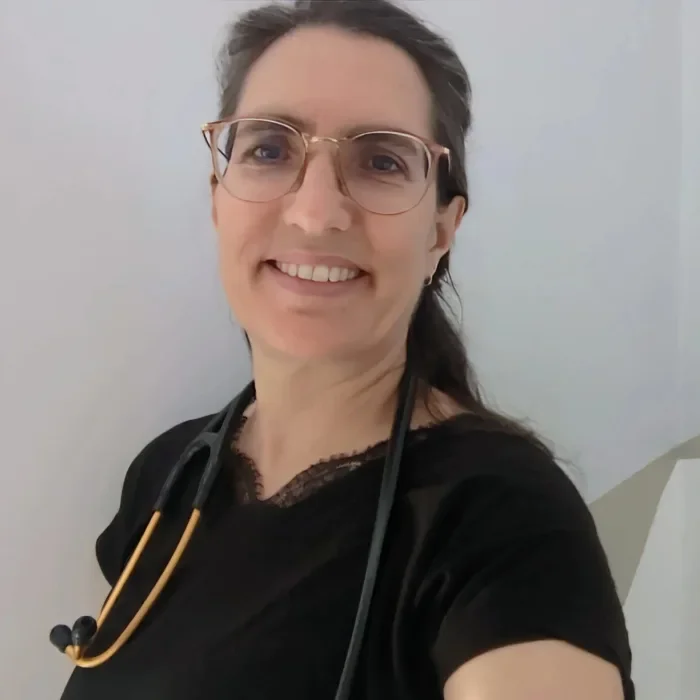
Dr Carole Picaud
GP specialising in neurodevelopmental disorders
Supported from 2024 to 2026
“I have now been working with Coralie for a year.
I had already had sessions with two different psychologists.
It was the first time in my life, at 50, that I had sought this kind of support.
I very quickly stalled with those psychologists, and was even regularly retraumatised [by their approach].
As my search went on, I had the opportunity to begin working with Coralie.
From that moment on, I felt the safety of what I would call support 2.0, offering another level of competence, humanity, respect and care.
Coralie’s work integrates a great deal of psychological, scientific, systemic and somatic knowledge, complemented by solid training in the field of complex trauma.
To my mind, hers is an integrative approach, centred on the individual rather than on a methodology.
With my doctor’s eye, I appreciate and recognise the quality and seriousness of what she offers.”
At this point…
You’re probably wondering who I am, and what my background is.
Well, I’ve been studying human beings and the dynamics that drive them for seventeen years, exploring and training in various therapeutic approaches for twelve, loving bleu d’Auvergne for thirty-six and, in all likelihood, hating peppers for just as long.
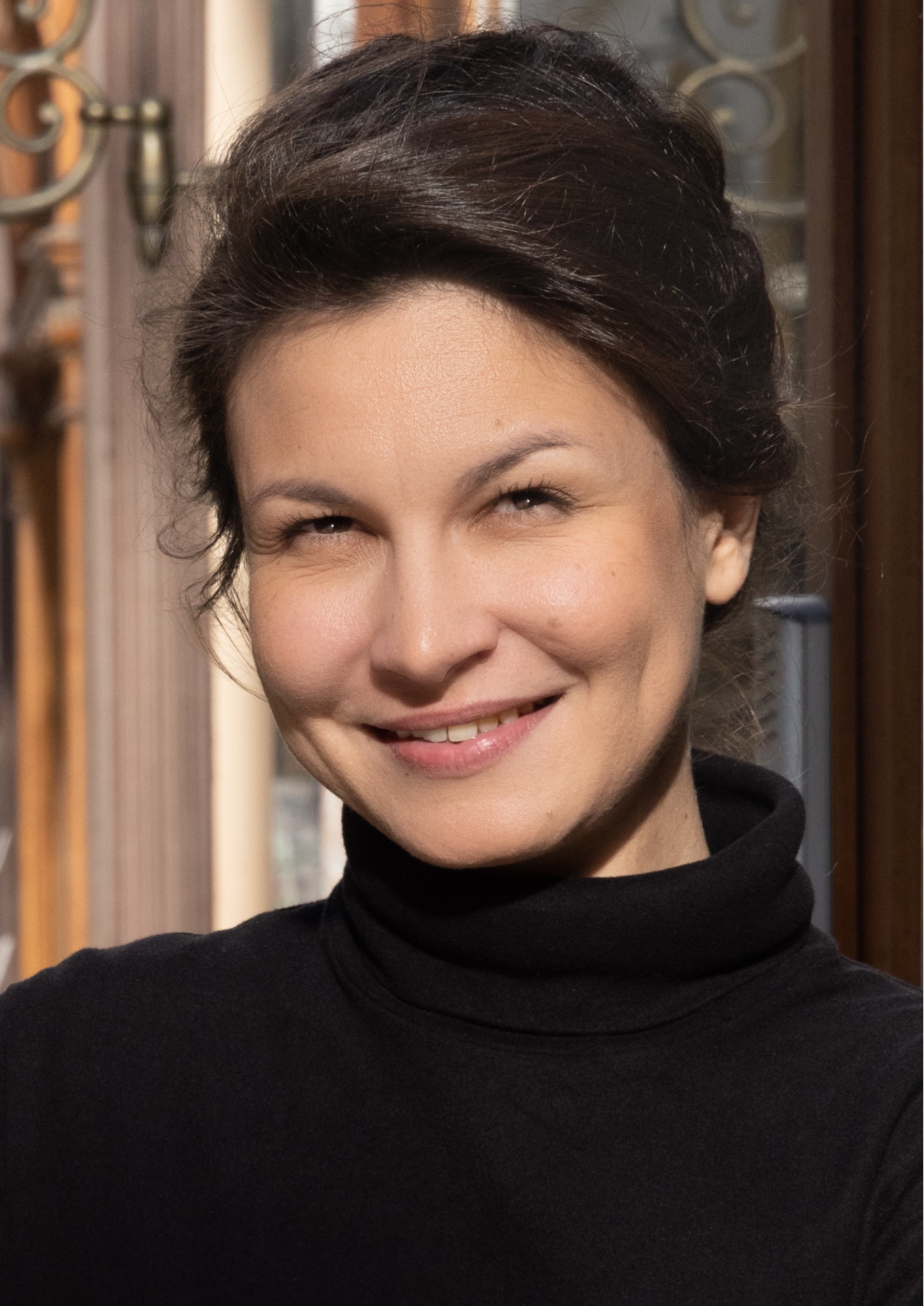
At 17, I entered a preparatory school for business schools in Paris.
At 19, I understood that what I believed to be the normal experience of life was not.
In great distress, I asked for help. Yet the way I was treated by medicine and psychiatry did not help me.
So I preferred to believe, at the time, that the solution was simply to change the scenery, and to allow myself to do what made me come alive: theatre.
I dropped out of my course and went to drama school.
There, I experienced the joy and delight of being present to myself and to others.
Nevertheless — or obviously — I still felt great inner suffering, and great difficulty in relationships.
I finally began psychotherapy at the age of 24.
EMDR, cognitive behavioural therapy, Internal Family Systems, Relational Intelligence.
Over the past twelve years, I have tried many modalities.
Some I found harder to go through than others.
On the whole, I often came out of them with the reinforced belief that I was deeply and intrinsically dysfunctional, too damaged to be helped.
Until I finally came across Somatic Experiencing first, and then NARM.
There, I discovered humanistic, non-pathologising approaches.
I first trained in Somatic Experiencing, in which I have been certified since 2024, as well as in other nervous system regulation practices.
Polyvagal theory, dynamic neurofeedback, Safe and Sound Protocol, Rest and Restore Protocol.
The whole lot.
But the real turning point was NARM.
At the age of 32, while training in Somatic Experiencing, I began a therapeutic process that integrated NARM.
My therapist, a Somatic Experiencing supervisor and NARM practitioner, had quite clearly been through hell herself.
For the first time in my life, I finally felt seen and heard.
And then, everything changed.
My relationship with myself.
My relationship with others.
My ability to simply feel good, there, present, serene.
My understanding of my own story.
My outlook on the future.
Everything lightened, transformed, took on the colours of joy, confidence and serenity.
Not that I no longer go through any difficulties.
Simply, I go through far fewer of them, with far greater capacity to get through them.
So it was only natural that I trained in NARM and obtained my certification in 2026 with Dr Beate Leisse.
I immediately decided to deepen my training by applying to the NARM Master Training, held in 2026 and 2027 in Copenhagen with Dr Laurence Heller, the founder of NARM.
I came back from the first module in October 2026 determined to strip away all the other modalities I had trained in and practise pure NARM, so transformed do I feel by this approach.
My vision of this work is somatic, relational and humanistic.
I don’t see problems to be fixed.
I see life impulses seeking to emerge.
Since 2023, I have practised at the Institut du PsychoTrauma Paris, avenue Niel, and at the Cabinet Médical de l’Étoile, rue du Colonel Moll.
In 2026, I decided to practise exclusively online.
Coralie Gueneau,
NARM-P, SE-P
NeuroAffective Relational Model®
Rest and Restore Protocol®
Safe and Sound Protocol®
Somatic Experiencing®
© 2026 Coralie Gueneau. All rights reserved.