
Life
even so
What you’re going through is real.
So is your life force.
Resolving trauma with
NeuroAffective Relational Model (NARM)
and Somatic Experiencing
Is this you?
You find it hard to feel that you belong.
You sometimes say yes when you would actually want to say no.
Your relationships with others can sometimes feel complicated, or unfulfilling.
You pay a great deal of attention to other people's needs, and a little less to your own.
You feel your emotions very intensely — so intensely, often, that it becomes painful.
You sometimes act impulsively or compulsively: in your relationships, in how you eat, or in how you spend.
You find it difficult not only to set your boundaries, but to identify them: sensing what is good for you and what isn't, and making choices that are in line with that.
And yet…
You do your best to look after yourself, but it never seems to be enough.
You're looking for answers: you read books, listen to podcasts, follow plenty of personal development, positive psychology or life coaching accounts on social media, without any of it really helping when things get hard.
You are aware that improving the situation you find yourself in takes time and a real commitment to yourself. You are truly ready for that. You simply hope to find (at last?) the right space, the right practice, the right person to support you.
You are open to personal development, but not vulnerable to its excesses. You want to be supported by someone serious and with integrity, who invests their time, energy and money in their own professional development: training, supervision, and their own ongoing therapeutic work.
You don't just want to understand what you are going through, and why. You want things to change. For good.
Because at this point, there's a question that's seriously starting to go round and round in your head:
"What the hell is wrong with me?"
Goodness me!
There is nothing wrong with you.
Difficulty feeling like you belong, identifying and setting your boundaries, and nurturing deep and fulfilling relationships, as well as emotional dysregulation and impulsivity, are now recognised, in many cases, as consequences of developmental trauma — that is, of a person's experience of a chronic failure of their environment during their earliest years, whether or not they, or the people around them, were aware of it.
This is documented in particular by Bessel van der Kolk, psychiatrist and founder of the Boston Trauma Center, and Gabor Maté, physician and specialist in addiction, child development and the link between stress and illness.
Developmental trauma, also known as complex trauma, alters our biopsychological organisation, which in turn gives rise to a range of social, psychological and physiological manifestations.
In other words, the difficulties you are going through are most likely nothing more than the consequences — painful, yes, but entirely natural — of:
the traumatic dysregulation of your nervous system, which alternates between, or combines, intense phases of sympathetic activation and parasympathetic shutdown;
adaptive survival behaviours that were necessary and useful at a given moment, but which, maintained over time, now undermine your capacity for wellbeing and fulfilment.
Autonomic nervous system dysregulation
Animals in the wild face life-threatening danger all the time.
So why don't they develop symptoms of post-traumatic stress?
It was by observing what these animals do after escaping a predator that Peter A. Levine developed Somatic Experiencing.
His answer comes down to one simple idea: the nervous system knows how to regulate itself, provided it is able to carry through to completion the responses that adversity sets in motion — fight, flight, freeze.
In humans, these responses are often judged, interrupted, suppressed.
Deprived of that capacity, the system stays organised around a threat that, in reality, has long since passed.
Our autonomic nervous system becomes dysregulated and tips into a chronic state of defence, one that alters how we perceive reality and how we respond to it.
This is the mechanism Stephen Porges describes in his polyvagal theory.
Adaptation: when the threat is chronic
Which leaves a question the animal never asks.
What happens when the threat you perceive comes not from a predator, but from someone your safety depends on?
There, neither fight nor flight is available.
To fight was to risk losing the very bond your safety depended on. To leave was to lose it too.
You learned to do the only thing that was possible: you adapted.
You did whatever it took to preserve the bond, whatever it cost you.
Not by choice, but out of an instinct for survival, you learned to anticipate, to adjust, to go without what you needed.
To shut down, or on the contrary to play the clown to lighten the mood.
To perform, or on the contrary to fade into the background.
To find comfort in food when you couldn't find it in connection.
To find satisfaction in compulsive spending when you couldn't find it in relationship.
Not once, but many times, over and over, often enough and for long enough that this became your way of functioning.
These behaviours are not failures.
They are things you learned.
They are adaptations.
These adaptations allowed you to grow up in an environment whose conditions were not favourable to your development.
Experiencing connection differently, to transform our adaptations
Today, these behaviours are reaching their limits.
Either because your environment has changed, and in this new environment, where they no longer have any reason to be, these behaviours now stand in the way of what you long for: peace, stability, gentleness, trust.
Or because these adaptive strategies demand an enormous amount of attention and effort, and today you have reached a perfectly normal and legitimate state of exhaustion.
This adaptive mechanism is precisely what Larry Heller formalised in the NeuroAffective Relational Model: the strategies that protected the child still organise the adult's relational life, and keep themselves in place.
Telling your story helps, but it isn't enough.
Regulating your nervous system helps too, but that isn't enough either.
What really makes the difference is a different experience of connection, repeated often enough and for long enough for your system to take it in and be able to reorganise itself, naturally.
Feeling good, and feeling that you belong.
Trusting yourself, and the future.
Building deep, nourishing relationships.
Living your emotions with more gentleness.
Sense what you need, and manage to express it calmly.
Restoring more stability and balance to your everyday life.
All of this is within reach.
With patience, commitment to yourself, and an approach tailored to your situation.
L’Accompagnement Somatique Relationnel
— Somatic Relational Support
A space to experience connection differently, regulate your nervous system and update your adaptive strategies, so that you can feel more joy, freedom and peace in your everyday life.
L’Accompagnement Somatique Relationnel is:
— A 50-minute individual session, every week or every other week, as suits you.
— An approach informed by polyvagal theory, Somatic Experiencing and NARM.
— Developing the skills that are essential to any deep, peaceful and mutually nourishing relationship.
— Humour, gentleness, and respect for your uniqueness and your complexity.
No protocol imposed on you.
Just deep, individual work, at your own pace, week after week, month after month, to support a structural and lasting transformation.
What they say

Kevin Duchier,
Founder of Sloow.app
translated from French
"Before I met Coralie, I was burnt out.
I felt intense anxiety every day and I couldn't connect with myself or with the people close to me.
I was at a loss, convinced I would never be able to change my emotional experience.
I felt lost, and I was terrified of feeling that anxiety for the rest of my life.
I’d had first sessions with some ten psychiatrists, psychologists, psychoanalysts and hypnotherapists.
I felt either judged, or misunderstood, or as though a therapeutic dogma was being imposed on me without my really being seen.
I truly believed no practitioner would ever be able to help me.
Today, I no longer feel anxiety. Which is extraordinary.
I'm connected to my emotions and to what's happening inside me.
I've regained a great deal of vitality and self-confidence.
I connect with others more easily.
Most of my difficulties are now behind me; I feel free, and at peace with myself.
Coralie knows how to create a caring, light, welcoming and positive connection.
She never judges, she always supports, and she creates a deeply safe space in which to bring up any subject at all.
She has very broad, cutting-edge theoretical knowledge, which she is constantly enriching through reading and training.
Her intuition and her precision are a real gift: you never leave a session feeling that something was missed.
I trust Coralie completely — the quality of her work is exceptional. She has changed my life in a way no practitioner ever managed before.
Thank you for where I am today, which is a world away from where I was a year ago."
A note from Coralie: it's Kevin who changed his life — I only walked alongside him while he did!
Carole P.,
GP specialising in neurodevelopmental disorders
translated from French
"I have been working with Coralie for a year now.
I had already had sessions with two different psychologists.
It was the first time in my life, at 50, that I had sought this kind of support.
I very quickly stagnated with those psychologists, and was even regularly retraumatised [by their approach].
As my search went on, I had the opportunity to begin working with Coralie.
From that moment, I felt the safety of what I would call support 2.0 — offering another level of skill, humanity, respect and care.
Coralie's work draws on a wide body of psychological, scientific, systemic and somatic knowledge, backed by solid training in the field of complex trauma.
To my mind, hers is an integrative approach — centred on the person, not on a methodology.
As a doctor, I appreciate and recognise the quality and seriousness of what she offers."
Ruth Ashburn,
Licensed Massage Therapist
Zach Carlsen,
Author of “Healed Enough”
The virtuous circle
1
Somatic relational experiencing
Together, at your own pace, and within the real, carefully measured connection of the session, we experience a different way of being in relationship from the one you have always known.
2
Nervous system regulation
This new way of being in relationship supports the regulation of your nervous system.
Fight and flight responses that could never be completed begin to emerge, and at last find, in this space, the opportunity to be integrated.
3
Updating your adaptive strategies
Our somatic relational work and the regulation of your nervous system give you access to greater clarity about your adaptive strategies.
You identify them and discover, at your own pace, strategies better suited to your current environment — strategies that allow you to truly meet your needs.
1
And the circle begins again
Within our sessions first, then, gradually, in your everyday life.
You taste an entirely different felt sense of connection, and your system, having known that felt sense, nourishes it everywhere else in your life.
Your nervous system regulates, the strategies that once were yours are updated and, little by little, you grow your capacity to feel, deeply, the joy, freedom and peace you long for.
Oh, and by the way…
You may be wondering who I am, and where I've come from?
Well: I have spent seventeen years studying human beings and the dynamics that drive them, twelve years training in various approaches to wellbeing, thirty-six years loving bleu d'Auvergne, and probably just as long hating peppers.
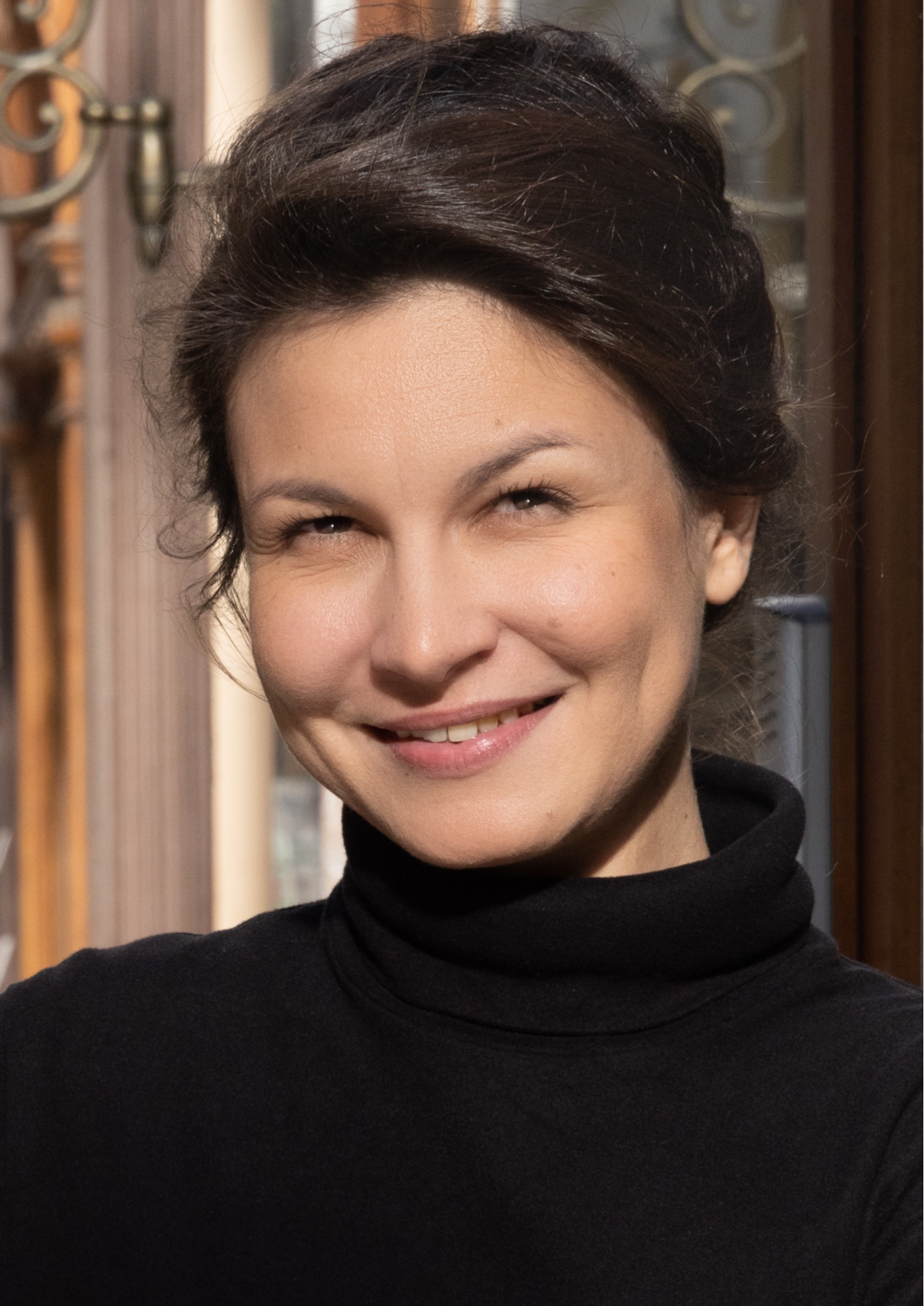
At 17, I begin an intensive preparatory programme for France's top business schools, in Paris.
I eventually drop out, realising that I have absolutely no idea why I'm doing what I'm doing.
I have no interest in business.
Only an interest in performing well.
And that is no longer enough.
I seek support, for a few months only.
At the time, I have little sense of the scale of what I am going through — emotionally, and relationally.
I head for drama school.
There, I experience the joy and the delight of presence — to myself, and to others.
Nevertheless, or perhaps inevitably, I still feel deep inner pain, and great difficulty in relationships.
I finally begin psychotherapy.
Alongside it, I discover Ashtanga yoga, mindfulness, life coaching.
My personal research leads me naturally to polyvagal theory and the notion of developmental trauma.
I train and earn my certification in trauma-informed life coaching, with a somatic approach more interested in what emerges when we restore connection to ourselves than in setting goals and action plans.
Yet I cannot help but see the limits of coaching, and I choose to deepen my skills and experience by turning to Somatic Experiencing.
I am invited to join the Institut du PsychoTrauma Paris, where I decide to set up my practice as a Somatic Experiencing Practitioner.
At the same time, I deepen my skills and knowledge by training in NARM, the NeuroAffective Relational Model.
This practice works deeply with attachment wounds, fostering a gentler, truer and more authentic experience of our relationships.
I leave the Institut du PsychoTrauma Paris and am invited to join the Cabinet Médical de l'Étoile by the psychiatrist and psychotherapist with whom I did my own psychotherapy ten years earlier.
He has watched me evolve and radically transform my quality of life through the approaches I have explored.
He wants his patients, in turn, to be able to benefit from them, alongside their medical and psychotherapeutic care.
In 2026, I am seizing the privilege of being bilingual and choosing to invest my time, energy and money in a Bachelor of Science in Psychology, so as to benefit from the quality and innovation of British higher education and, in time, within a few years, to qualify as a psychologist.
My vision of this work is somatic, relational and humanistic.
I don't see problems to be fixed.
I see life force seeking to emerge.
This vision draws on the theoretical and experiential skills I have built over the past seventeen years, and on my own journey.
At times I feel as though I have lived a thousand lives, so different is my experience today from that of the first part of my life.
A client once told me exactly that: the sense of strangeness, almost of the unfamiliar, she feels when she reconnects with where she was a year ago.
As for me, the deep unease I carried for so many years has given way to an open heart and a keen appetite for life and all its possibilities.
What they say
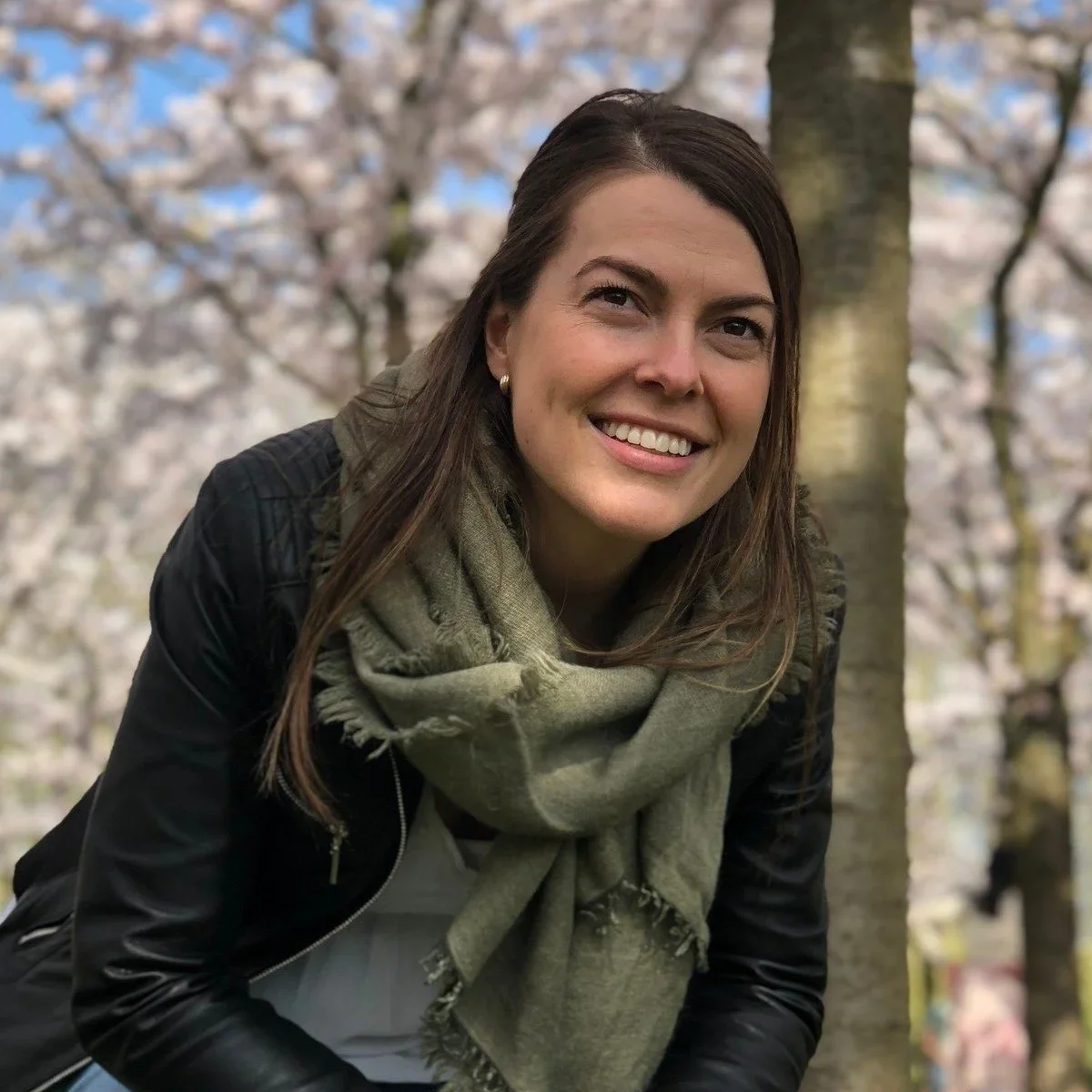
Anne van der Giessen,
Consultant
"Being in Coralie's space has been such a powerful personal growth experience for me.
Since day one, she has always met me with love, sometimes the tough form when needed, and a sense of clarity through honesty that is unrivalled.
Part of the medicine I experience through Coralie is that there is nothing that can remain hidden due to her intense compassionate curiosity and intuitive enquiry.
This mirroring has allowed me to be truly honest with myself and acknowledge what isn't working as well as what is under-celebrated about myself and in my life more broadly.
She is a fierce advocate of me and for me, and invites me to step into a space of self advocacy by being a stand for who I am and what I represent in the world.
She sees how powerful I am and continues to invite me back to that when I forget. Always with love. Always with space.
I am forever grateful for what Coralie has brought into my life."
Carl de B.,
Entrepreneur
translated from French
"As I was searching, chance put Coralie on my path at a difficult time… and it chose well.
On top of a complete command of the tools of SE and NARM, Coralie is funny, full of life and insight. Exactly what I needed to feel safe and at ease.
I wholeheartedly recommend her."

Heather Nash,
Retired
"Coralie creates a wonderful supportive safe space to allow you to open up without intimidation.
She is a generous practitioner, a great listener, and an ally who will champion your highs and hold you in your lows as she gently guides your self exploration.
Working with Coralie has helped me to discover and befriend parts of myself that deserve to have a voice and to be heard, and with her own unique wisdom has given understanding on how to work with feelings and emotions and integrate them with love and compassion.
Coralie is a true gift."
What may be on your mind
-
My expertise rests on the following.
✓ A long, regular and in-depth personal experience of the very work I offer you: thousands of hours of support received since the age of 19, which have helped refine my stance and my practice.
I know, in my body, what it is to be where you are.
I have lived it, again and again.
I have experienced forms of support in which I felt retraumatised.
And then I discovered Somatic Experiencing and NARM, which I brought together in L'Accompagnement Somatique Relationnel to create precisely the approach I would have needed — one that would have spared me years and years of difficulty, and of wandering from one form of therapy to the next.
✓ My current investment in a Bachelor of Science in Psychology, studied online and at my own pace, so as to benefit from the quality and innovation of British higher education and, in time, within a few years, to qualify as a psychologist.
✓ Thousands of hours of practice, and hundreds of people supported.
Hundreds of hours of supervision, to make sure I do this as well as I possibly can, and to keep refining my work.
✓ Collaboration with psychiatrists at the Institut du PsychoTrauma Paris and at the Cabinet Médical de l'Étoile.
✓ Certification in Somatic Experiencing, which requires, among other things, 216 hours of in-person training spread over two to three years.
✓ Certification in NARM, which requires, among other things, 160 hours of in-person training spread over two to three years.
✓ Selective admission to the 2026–2027 NARM Master Training in Copenhagen with Larry Heller.
-
Larry Heller, co-founder of the Gestalt Institute of Denver and of the Rocky Mountain Psychotherapy Institute, in Colorado, holds a doctorate in clinical psychology and taught Somatic Experiencing for many years.
After decades of practising and teaching different modalities, he identified a significant gap in the approaches to early developmental trauma.
It is from this observation — and from the growing need in the field — that NARM, the NeuroAffective Relational Model, was born.
NARM addresses, in particular, the limits of Somatic Experiencing in cases of complex trauma.
Even in adulthood, and until a different experience of connection has been integrated within the work, the fight and flight responses remain out of reach, because they are directed at the person on whom, as a child, our survival depended: the attachment figure.
Our system is still steeped in that dependence, and therefore in the belief that, within this bond, to fight or to flee is to put ourselves in mortal danger.
What's more, in order to grow up in an environment that was unable to meet our needs — whatever the reason — we had to develop relational adaptations that still play out today, often without our realising, and that feed the dysregulation: not daring to say no, not knowing how to identify and honour our own needs, acting impulsively or compulsively, and so on.
Imagine taking a bath.
You find it too hot.
Somatic Experiencing lets you scoop some water out of the bath and add cold water to it, but it doesn't turn off the hot tap.
NARM turns off the hot tap.
L'Accompagnement Somatique Relationnel does all three.
It scoops out the water, adds the cold, and above all, turns off the tap.
-
Developmental trauma is a repeated, relational trauma, experienced by a child or adolescent whose brain is still developing.
Picture a tree.
We are not talking about an axe blow to a trunk that is already formed and solid, with roots anchored deep in nourishing soil.
We are talking about tiny, repeated knife cuts, deliberate or not, to a young sapling that manages to grow all the same — constantly adapting to those tiny, repeated knife cuts, in depleted soil, without sunlight, without water.
Even when, in its own experience, it believes it lacks nothing, and on the contrary enjoys a privileged environment.
What becomes of that sapling?
What does its trunk look like once it has grown into a tree?
How does it fare against the elements?
How does it respond, the day it finally receives the sunshine and the rain it truly needs?
And not the ones it adapted to?
Can it take them in — or will it all be too much at once, for a tree that has grown used to something else?
This work unfolds over time because it means unlearning 20, 30, 40, 50, 60 years of conscious and non-conscious functioning — functioning that got you to where you are today, but that no longer fits your current environment, or what you long for.
-
At the start of each session, we always take the time to clarify what you want for yourself.
Sometimes, that alone is a challenge.
Either because you don't yet have full access to it, or because no one has ever paid sincere attention to what you want.
Or because you judge what you want, and don't dare to hope for it, for fear of being disappointed.
The work has already begun here — because all of this is already revealing the strategies you had to put in place to adapt and to grow in your environment.
Together, we bring sincere, caring attention to what emerges.
Once you have more clarity about what you want for yourself, we explore what stands in the way.
Sometimes it's beliefs.
Sometimes it's very concrete circumstances.
Sometimes it's emotions.
What interests us most is how you relate to these obstacles.
Because this is precisely where your potential for actualisation lies.
As our sessions unfold, the virtuous circle of L'Accompagnement Somatique Relationnel takes shape, and you gradually grow your capacity to feel, at last, the joy, freedom and peace you long for in your everyday life.
-
Sessions now take place exclusively by video call.
-
Yes, it works perfectly well by video call!
The work centres on your bodily sensations and on what moves between us.
That is every bit as rich online as in person, if not more so!
The distance invites us to bring more curiosity to what you are experiencing, and to grow your capacity to share it.
It’s a precious capacity, and one we rarely take the time to develop — when in fact it contributes greatly to regulating your nervous system, to resolving trauma, and to relational safety.
So the real question is: what matters most to you? The quality of the connection you create with the one you choose to support you, or being physically in the same place?
-
I don't promise a number, because I don't know of an honest one.
The work unfolds over time, usually at the pace of one session a week, or one every other week.
Some people come for a few months, others for much longer.
-
That depends on you — on what you want, and what you need.
Some people book one or two sessions a week.
Others, one session every other week.
-
A session usually lasts 50 minutes.
From our second appointment onwards, however, you can also book 75-minute sessions, if you wish to give yourself more time and space.
-
When you book a slot, my calendar automatically organises itself around your booking.
For that reason — and because I consider our time to be our most precious resource — I do not offer the option of cancelling a session once it is booked.
However, you may reschedule your session once, at least 72 hours before it takes place, by clicking the “Reschedule my appointment” button in your confirmation email.
-
That's what I hear most often, and it's fair.
If you have learnt to regulate your nervous system, you have already come part of the way, and not the easiest part: you can recognise your states, you have tools, and you use them.
What these tools do very well is bring your autonomic nervous system back into its window of tolerance.
This is known as stabilisation.
What they cannot do on their own is allow the integration of the fight and flight responses that remain frozen, or act on the strategies that lead to dysregulation.
It's a bit like scooping water out of a bath that is too hot, or adding cold water to it.
It is necessary — but as long as the hot tap is running, you have to keep doing it.
L'Accompagnement Somatique Relationnel does all three.
It scoops out the water, adds the cold, and above all, turns off the tap.
So that regulating your nervous system is no longer a goal that demands so much practice and effort, but the normal, natural outcome of a deep, structural transformation.
-
You and I, together, create a relational space that supports your sense of safety.
Depending on the experience of connection you have had until now, this can take more or less time.
Once you feel fully safe in our connection, the fight and flight responses that were frozen will emerge — naturally, and of their own accord.
Your system is intelligent.
We follow its impulses, while slowing things down and using your imagination, so that it can complete, in the here and now, the psychophysiological processes set in motion by defensive responses that were mobilised but never allowed to reach completion.
This is what we do with Somatic Experiencing.
When these responses remain out of reach — or when you recognise that our connection is safe without quite being able to feel it — it means certain adaptive strategies are still at work, and are now reaching their limits.
That is where NARM comes in.
-
There are as many ways of supporting a human being as there are human beings doing the supporting.
The name of a practice or an approach never guarantees the quality of your experience, which depends far more on the presence, the listening and the self-awareness of the person supporting you than on their training or certifications — although these do provide a valuable theoretical framework.
And sometimes, even with all of that, for whatever reason, it just doesn't click.
Only experience can tell you which practitioner offers a practice suited to your needs.
Whether with me or with someone else, try the experience, again and again.
You will find the right person!
Coralie Gueneau, SEP
Somatic Experiencing®
NeuroAffective Relational Model®
Accompagnement Somatique Relationnel®
© 2026 Coralie Gueneau. All rights reserved.
This website is subject to the terms of use. Somatic Relational Support is not a medical act or the practice of psychology: Coralie Gueneau is not a healthcare professional. The content of this website and of all content published by Coralie Gueneau does not replace medical or psychiatric advice, diagnosis or treatment, and should not be used for those purposes. The testimonials presented reflect their authors' own experience; they have no scientific value and do not predict what you will experience. Always consult a healthcare professional if you believe you may need medical or psychiatric treatment. If you are in an emergency, call your local emergency services immediately.